Leadership the World Desperately Needs
Leadership training programs were all the rage in the corporate world a dozen or so years ago. I know that they’re still around, but I have the sense that they’re not as popular now.
“Leadership Development enhances one’s skills, knowledge, and abilities to lead others effectively,” says an online promotion. “It involves learning new concepts, applying new behaviors, receiving feedback, and reflecting on performance. …It is about acquiring technical or functional skills and developing emotional, social, and cognitive skills essential for leading in complex and dynamic environments.”
When I was working, I found the literature about leadership full of vague language that masked the idea that leadership was really about “getting others to do what you want.”
Another Kind of Leadership
Ok, so that may be one kind of leadership, but there’s another which is closer to the concept of education, one whose focus is not within the narrow borders of the “bottom line” or even an organization’s goal of effectiveness.
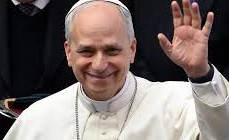
The National Catholic Reporter (NCR), in its latest edition, named Pope Leo XIV the “2025 Newsmaker of the Year.”
“Surprise, surprise,” you might say if you’re feeling cynical. “Who would guess that a Catholic publication would name the head of its church as ‘newsmaker of the year?’?”
(And here, I should apologize to my non-Catholic readers for again focusing on a Catholic issue. I can only plea that my journalism professors in grad school said that you should “write about what you know.” Besides, the idea of this blog is, I believe, applicable to not just Catholics.)
What the NCR Has to Say
So, what’s so great about the “new” pope’s leadership? Here’s what the NCR has to say.
“His early actions as pope are not just administrative moves; they are moral guiding posts in a world yearning for direction. Amid rising authoritarianism, growing inequality, ecological decline and disturbing normalization of violence, he offers something rare: a pastor – leader urging the church to reclaim the dignity of every person – not as an abstract idea, but as the core of its public witness.”
And, following the footsteps of his predecessor, Pope Francis, he does so with a moral clarity that is also rare today.
Let’s compare this kind of leadership with what we find in the secular world. I believe it is generally characterized by authoritarianism; moral obscurity (especially in acting on a belief that “might makes right” and that “the end justifies the means”); an emphasis on money and power; a disregard for the marginalized and poor and for basic human rights; exaggerated nationalism; a disregard for the welfare of workers (layoffs as a first choice); and a lack of willingness to accept people and ideas that clash with ours.
A Correlation?
Too pessimistic a view? I don’t think so. And as one who writes a blog for “people who have given up on God and/or religion,” I think there is a correlation between the kind of leadership described above and the difficulty of so many to do what it takes to find God and let God find them.
That’s why the kind of leadership offered by Popes Francis and Leo are so needed today. Here’s more of what the NCR about Pope Leo.
“In 2025, with democracies wobbling, economic systems collapsing, and whole populations numbed by division and despair, Pope Leo XIV’s emergence has been the most consequential development in Catholic life – and among the most hopeful developments in global public life.
“His papacy is still evolving. Yet he has already become one of the few leaders speaking with authority that comes from humility, from lived experience and from unbending fidelity to conscience.”